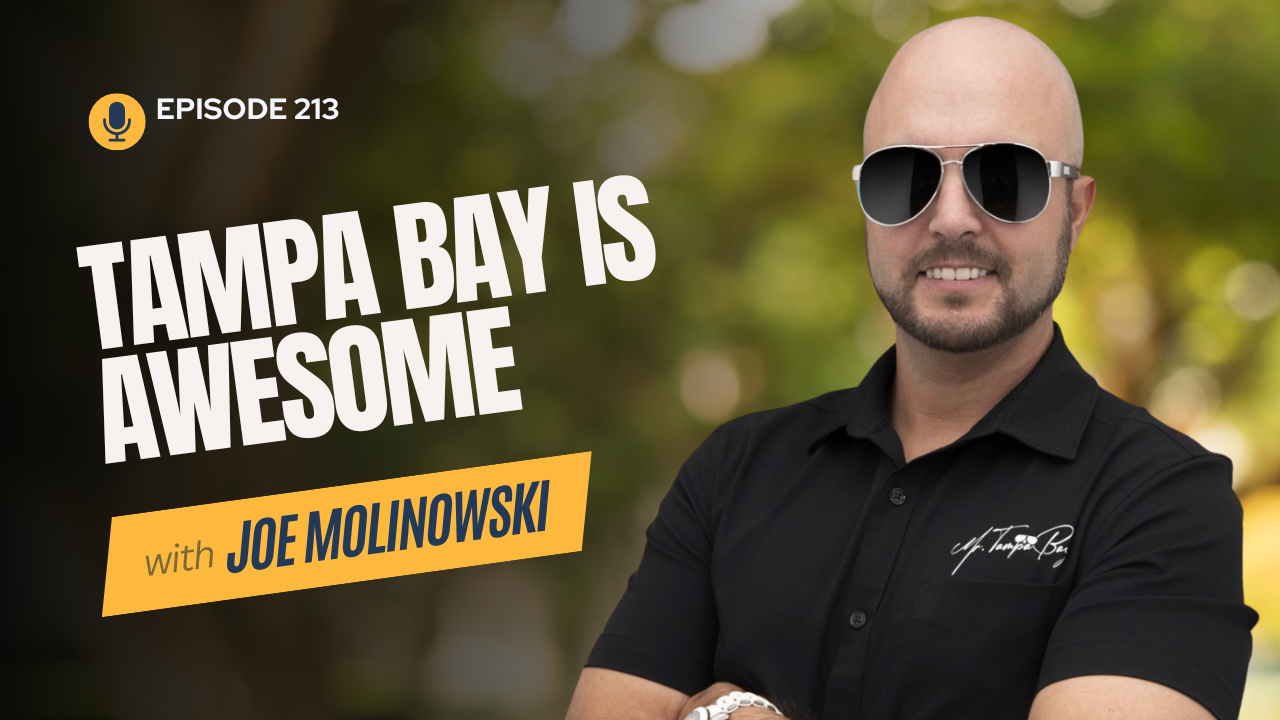
If you’ve ever wondered how a local page turns into real influence, the Tampa Bay is Awesome marketing strategy is a blueprint worth studying. In Episode 213 of Palm Harbor Local, Joe Molinowski breaks down how “awesome” works not as a logo, but as an idea people instantly agree with.
This conversation hits a nerve for anyone building a local brand, a real estate presence, or a community platform: the fastest growth usually comes from doing the simple things consistently, and doing them with intention.
The real origin story starts with networking and a problem worth solving
Joe didn’t wake up one day and decide to build a media engine. He was deep in networking, hosting events constantly, and spending real money printing flyers just to tell people where to go. That pain point pushed him to build a basic website instead. The important part is not the tech, it’s the pattern: solve a real problem in your world first, then let the “business model” show up second.
That same pattern is all over local media success. If you’re already the person who knows what’s happening, where people should eat, what’s worth doing this weekend, and who to call, you’re sitting on the raw ingredients of a community brand.
If you’re building your own local presence, start here: make it easier for people to stay connected. Everything else becomes easier after that.
(Related: browse the wider Palm Harbor Local ecosystem at https://palmharborlocal.com/ and the podcast hub at https://palmharborlocal.com/podcast/.)
“Is awesome” is an idea, not a brand
One of the sharpest lines Joe drops is that “is awesome” doesn’t land like a brand, it lands like a belief. People don’t have to be convinced. They read it and think, “yeah… fair.”
That matters because most people build brands that require attention and trust before anyone cares. An idea-based page flips it: the headline itself does the heavy lifting.
This is also why niche pages can explode quickly. “Downtown Tampa is awesome” is instantly understandable. It doesn’t ask people to learn a new identity, it offers a shared point of view. That reduces friction and increases follows, shares, and repeat engagement.
Tampa Bay is Awesome marketing strategy for content that doesn’t burn you out
Joe’s system is refreshingly unromantic: keep it simple or it won’t last. He shoots on his phone. If it requires extra steps, it becomes “work,” and work dies under volume.
He also makes a point that newer creators ignore: posting every day is not the goal. Posting with a purpose is the goal. Random filler posts can actually hurt your next strong post because you’re training the algorithm (and your audience) to ignore you.
His rule is basically this:
-
If the post is not designed to trigger engagement, don’t post it.
-
Shares and saves matter more than likes.
-
Consistency matters, but “intentional consistency” beats mindless volume.
If you run a business in Palm Harbor or Tampa Bay, this should reshape how you think about content. Your calendar is already full. You don’t need more posting… you need better posting.
Your headline is the whole game
Joe is blunt here: if you don’t start your video or post with a headline, you already wasted it. The hook is not a nice-to-have. It’s the entry fee.
This aligns with what Meta has been pushing publicly: strong hooks in the first few seconds are critical because people decide immediately if something is worth watching.
Practical takeaway you can use today: write the headline first, before you film anything. If the headline isn’t interesting, filming won’t fix it. Your best content is usually one good sentence with proof behind it.
Example headline styles Joe’s approach naturally fits:
-
“Most people get this wrong about [local topic]”
-
“Don’t go here until you know this”
-
“This is why [place] is quietly underrated”
-
“Stop posting like this if you want reach”
Turning influence into revenue without getting weird
Joe shares a real lesson from early monetization: he was charging agents $500–$1,000/month for exposure and generating massive lead volume, but the pricing didn’t match the value. Eventually he realized he was creating far more downstream revenue than he was capturing.
That’s a big point for anyone building a media brand: if you can reliably create outcomes (leads, foot traffic, ticket volume, booked tables), your pricing has to reflect outcomes, not effort.
He also mentions the influencer misconception that platforms pay creators in meaningful ways. Most of the money is not coming from Instagram or Facebook directly. It comes from what you can drive off-platform: restaurant traffic, brand deals, partnerships, real estate transactions, events, and products.
The expansion plan for 2026
Joe isn’t slowing down. He talks about building new shows and podcasts, partnering in a franchise development effort, and producing content that taps into built-in audiences. The strategy is smart: stack distribution first, then build the show. If the guests and partners bring their own audiences, every episode launches with momentum.
This is the same principle that makes community podcasts powerful: local guests share because it makes them look good, and the audience grows because the content is about “us,” not about the host’s ego.
If you’re thinking about your own growth plan for 2026, the play is simple: build partnerships where other people want to share your content for you.
Where to find Joe and Tampa Bay is Awesome
You can explore Tampa Bay is Awesome here: https://www.tampabayisawesome.com/
Instagram: https://www.instagram.com/tampabayisawesome/
Facebook: https://www.facebook.com/tampabayisawesome/
If you like conversations that help you think bigger about community, business, and content, subscribe to Palm Harbor Local, join the newsletter, and follow along on Instagram for behind-the-scenes clips and local spotlights. Start here: https://palmharborlocal.com/